GYNEQUIPE
Monday to Thursday18:00 - 22:00
AddressXenias 1 & Vassilissis Sofias, Ilisia
An ectopic pregnancy is defined as a pregnancy that implants and develops in a place other than the endometrial cavity.
About 20 out of 1000 diagnosed pregnancies are ectopic.
The vast majority of ectopic pregnancies are located in the fallopian tubes, 95-96%, while the remaining 5-6% are located in other locations, such as the ovaries, the cervix, the scar of a previous caesarean section or even the peritoneal cavity.
Risk factors predisposing to ectopic pregnancy are history of previous ectopic pregnancy, history of previous pelvic inflammation, smoking, assisted reproduction techniques, older age, frequent vaginal washings.
A special and rare case is the so-called heterotopic pregnancy, i.e. the simultaneous double, ectopic and intrauterine pregnancy, whose frequency is estimated at 1 in 30,000 pregnancies. In recent years, however, this percentage has increased due to assisted reproduction techniques (1/4000).
Ectopic pregnancy is a potentially dangerous pathology for the woman’s life, in case of untimely diagnosis. The risk is rupture and uncontrollable internal bleeding. That is why, even in case of a positive pregnancy test, a visit to the gynecologist is necessary early, in order to rule out the possibility of abnormal implantation. A transvaginal ultrasound is sufficient to establish the diagnosis of ectopic pregnancy.
The main symptom is abdominal pain, sometimes accompanied by vaginal bleeding.
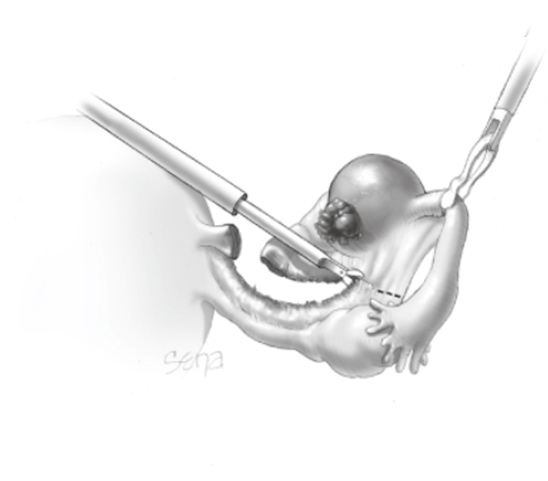
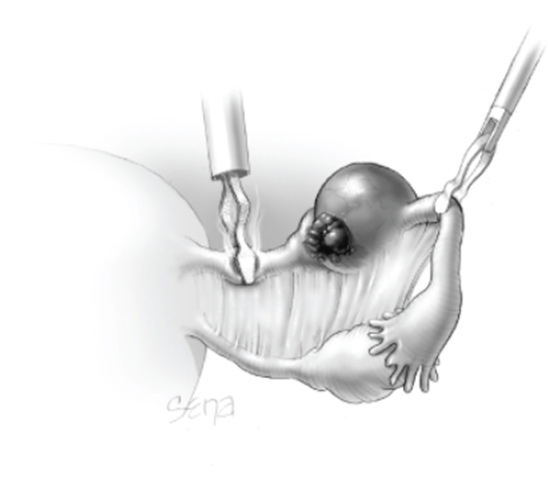
Treatment is mostly surgical and now almost always done laparoscopically. In these cases, either a salpingectomy (removal of the fallopian tube) is performed, or a salpingotomy (removal of the pregnancy while preserving the fallopian tube), which, however, depends on the circumstances.
In special cases, there is also the possibility of conservative, pharmaceutical treatment, with intravenous or intramuscular injection of methotrexate.
Women who have a history of ectopic pregnancy, which was treated conservatively or surgically, have up to a 15% chance of having another ectopic pregnancy in the future.
The blood measurement of β chorionic gonadotropin is the hormone used to diagnose and monitor a pregnancy.
It is the hormone produced during pregnancy and its values increase daily from the beginning of pregnancy until the end of the first trimester. From there, prices stabilize until delivery.
In early pregnancy, monitoring is done by measuring β chorionic gonadotropin in the blood, until the fetus is large enough to be seen on ultrasound. Then the follow-up is done exclusively by ultrasound.
However, to have an image of an ongoing pregnancy on transvaginal ultrasound, the chorionic values should exceed 1000-1500 units, which roughly coincides with a 10-day delay in the period.
In general, ectopic pregnancy shows a low increase in chorionic gonadotropin values, and in case of suspected ectopic pregnancy, monitoring is close with frequent chorionic gonadotropin measurements and frequent ultrasounds, until the location of the embryo is confirmed.



Covering every aspect of a woman’s life

without stress and full of confidence during this special time

One day diagnosis and treatment. (No touch, Diagnostic and Operative Hysteroscopy)

Personalized choice of treatment.

Gynaecological and obstetric scans (3D US, 4D US, Doppler US)

Urinary incontinence and pelvic prolapse treatment.

Prevention and treatment of gynaecological cancers. (International Guidelines)

Our services
Affiliated Hospitals
Affiliated Institutions
Office Hours
© Copyright 2024 Gynequipe. All right reserved

