GYNEQUIPE
Monday to Thursday18:00 - 22:00
AddressXenias 1 & Vassilissis Sofias, Ilisia
Fibroids are one of the most common benign conditions of the uterus.
12 to 25% of women of childbearing age have a fibroid, whether it shows symptoms or not.
Basically, these are spherical formations of muscle and fibrous tissue inside the uterus. Their size, growth rate and number vary from woman to woman and are unpredictable.
Their association with female hormones and more specifically with estrogen is clear while the use of contraceptives or replacement therapy can contribute to the creation and increase in size.
Even in adolescence they can appear, although rare, while most of the time, they decrease in size after menopause due to the cessation of hormones, but they do not disappear.
Risk factors are the black race (2-3 times higher frequency), heredity, early menarche, i.e. the age at which the period starts (<10 years old), the number of pregnancies (the more, the lower the chance of fibroids) , high consumption of red meat and alcohol, high blood pressure.
Depending on their size and location in the uterus, fibroids can cause the following symptoms:
Uterine fibroids can combine various symptoms from the above depending on their size, number and/or location.
The treatment is adapted according to the age of the woman, the symptoms she presents and her desire for a pregnancy if she is of reproductive age.
In some cases, fibroids can grow so large that they distort the uterus and even increase the weight by several kilograms. Thus, the uterus becomes so large that it occupies most of the abdomen to the point of being palpable and causing a feeling of fullness, discomfort and even difficulty breathing in the woman.
Usually something like this happens to women who do not have regular gynecological monitoring, so fibroids grow silently for a long time. In general, this is not a threat to the woman’s life, but it complicates the treatment, since in these cases the preservation of the uterus is usually not possible. In addition, surgical repair cannot be done with the laparoscopic method most of the time and a transverse incision like a caesarean or even a vertical one needs to be performed.
The relationship of fibroids to pregnancy is closely related. A fibroid does not rule out a spontaneous pregnancy but it can affect its outcome.
The most important thing is the location of the fibroid and not the size in relation to the pregnancy. Thus, fibroids that do not affect the endometrial cavity, i.e. do not deform it, do not necessarily need to be removed since the pregnancy can develop without a problem. On the contrary, fibroids located in or very close to the endometrial cavity must be removed because they prevent the implantation of the embryo.
The same applies to the case of in vitro fertilization, although some studies recommend the removal of fibroids larger than 4 cm before starting efforts, regardless of location.
As far as the progress of a pregnancy with a fibroid uterus is concerned, in general there is no problem and labor proceeds normally.
In some cases, however, the size and number of fibroids can cause contractions or even pain during pregnancy. In addition, during labor, the contractions may not be well coordinated or the location and size of the fibroids may prevent normal labor, resulting in the need for a caesarean section.
Something that the woman should also keep in mind is that most of the time after a fibroid removal the mode of delivery is usually a caesarean section as the healing point of the uterus after the fibroid removal is sensitive to contractions when in labour and there is a risk rupture of the uterus, which is dangerous for the life of the baby as well as for the woman herself.
The decision to remove or not a fibroid before the start of a pregnancy is a decision that should be taken with the consent of the gynecologist as the parameters are many and the consequences are important for the outcome of the pregnancy.
Fibroids after menopause due to cessation of hormones shrink in size but do not disappear. They generally do not affect the later life of the woman unless due to their size they cause pressure phenomena, e.g. in the bladder which can manifest as frequent urination.
If they increase in size, which is rare after menopause, then further investigation and removal will be necessary as the possibility of malignancy is increased.
Consequently, the treatment is adapted according to the symptoms and the age of the patient and can be conservative or surgical.
With conservative treatment, we try to alleviate the symptoms with medication, while with surgical treatment, the treatment is radical and permanent, since we remove the cause of the problem, i.e. the fibroid.
Fibroids removal
In surgical treatment, we either selectively remove the various fibroids or remove the entire uterus, if these are very large in size and numerous in number.
Surgical removal is mainly done when the bleeding is significant and dangerous for the woman and when the fibroids prevent the achievement of a pregnancy.
In general, we recommend myomectomy (removal of fibroids) for younger women and women who have not yet completed their family planning, while for older women (after menopause) or women who have completed their family planning, we recommend the total removal of the uterus.
The removal can be done either by open surgery (laparotomy), or laparoscopically, or hysteroscopically depending on the location and size of the fibroid.
Now, however, most operations are performed with the laparoscopy method safely by specialized gynecologists, combining quick recovery and an excellent aesthetic result.
The laparoscopic method of removing fibroids is a safe and effective surgical procedure when performed by gynecologists specialized in this technique.
It combines fast recovery with excellent aesthetic results.
There is no official size limit in centimeters for fibroid removal by laparoscopy although after 10-12 cm the open method is usually preferred for reasons of speed and perhaps less blood loss during surgery.
The suturing method of the laparoscopic technique is in no way inferior to the open method, something that has been proven in numerous studies.
Regarding the cutting of the fibroid during its removal from the woman’s abdomen, this procedure is now done with special tools in specially designed bags, thus avoiding any possibility of dispersal of possible cancerous cells in the small possibility that the fibroid has turned into a malignancy (sarcoma).
Most of the time patients stay in the hospital only one night and return to normal life after 24-48 hours.
In the case of a pregnancy plan, the attending gynecologist will give the period from which the couple can start trying.
Fibroids after menopause due to cessation of hormones shrink in size but do not disappear. They generally do not affect the later life of the woman unless due to their size they cause pressure phenomena, e.g. in the bladder which can manifest as frequent urination.
If they increase in size, which is rare after menopause, then further investigation and removal will be necessary as the possibility of malignancy is increased.
In women of childbearing age also fibroids do not disappear but on the contrary their size and number can increase. However, there is a possibility with drug treatment, to reduce their size if surgical treatment is not an option.


Covering every aspect of a woman’s life
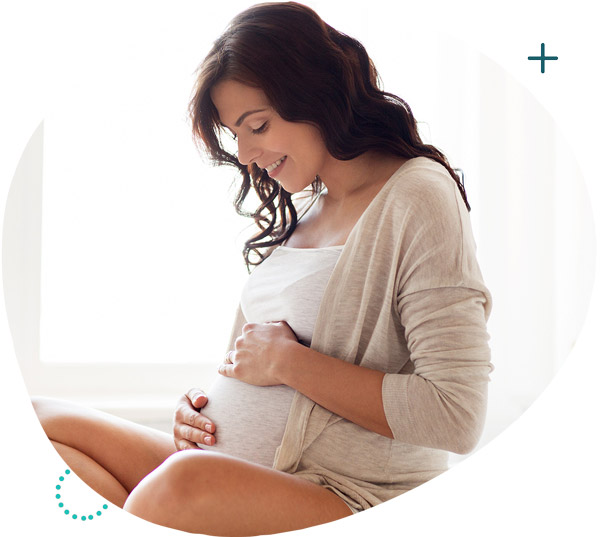
without stress and full of confidence during this special time

Minimally invasive surgery

One day diagnosis and treatment. (No touch, Diagnostic and Operative Hysteroscopy)
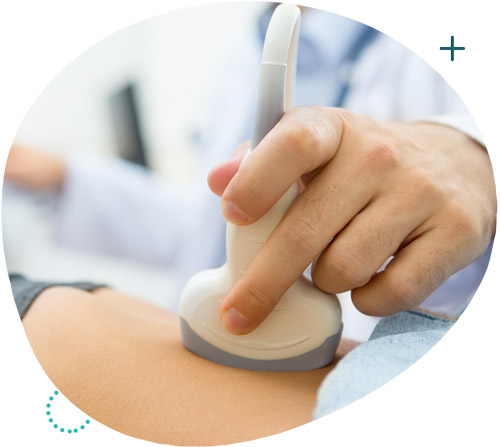
Gynaecological and obstetric scans (3D US, 4D US, Doppler US)

Urinary incontinence and pelvic prolapse treatment.

Prevention and treatment of gynaecological cancers. (International Guidelines)

Our services
Affiliated Hospitals
Affiliated Institutions
Office Hours
© Copyright 2024 Gynequipe. All right reserved

