GYNEQUIPE
Monday to Thursday18:00 - 22:00
AddressXenias 1 & Vassilissis Sofias, Ilisia
Pregnancy is usually not visible in its early stages, especially during the first few weeks after conception. The first time a pregnancy can be seen depends on several factors, including the method of detection and individual differences in women’s bodies.
Home Urine Pregnancy Test : Most women use home pregnancy tests to detect pregnancy. These tests measure the presence of human chorionic gonadotropin (hCG), a hormone produced by the developing placenta. These tests can provide reliable results as early as 7-10 days after conception, which is usually around the time of the missed period. However, in some cases, it may take a few more days for hCG levels to rise enough for a positive result.
Blood test: A blood test for hCG, usually performed in a laboratory, can detect pregnancy even earlier than a home pregnancy test. It can detect hCG levels as early as a few days after conception. This method is more sensitive and can confirm pregnancy before a missed period.
Ultrasound: An ultrasound is a common way to visualize a developing pregnancy. However, they are usually not performed until later in the first trimester, about 6-8 weeks after the last menstrual period. At this stage, a small, gestational sac may be visible in the uterus, and in some cases, a tiny fetal heartbeat may be detected. In order to detect pregnancy with a transvaginal ultrasound, the β chorionic level needs to be at least 1000-1500 units. Below this limit the pregnancy is not visible.
Physical changes: Some women may experience early physical changes such as breast tenderness, nausea, vomiting, fatigue, frequent urination, and mild abdominal bloating within the first few weeks of pregnancy. However, these symptoms can vary greatly between individuals and are not definitive proof of pregnancy. In general, pregnancy externally becomes visible on the woman’s body at 5 months, depending on her body type, as the uterus has grown quite a bit and, in addition, weight gain also begins to be felt.

Covering every aspect of a woman’s life

Minimally invasive surgery

One day diagnosis and treatment. (No touch, Diagnostic and Operative Hysteroscopy)

Personalized choice of treatment.
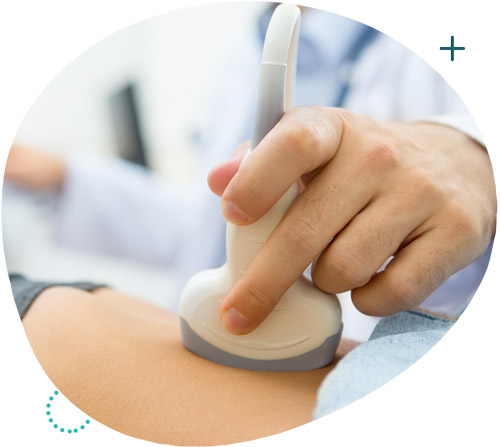
Gynaecological and obstetric scans (3D US, 4D US, Doppler US)

Urinary incontinence and pelvic prolapse treatment.

Prevention and treatment of gynaecological cancers. (International Guidelines)

Our services
Affiliated Hospitals
Affiliated Institutions
Office Hours
© Copyright 2024 Gynequipe. All right reserved

